

Contact Us

If you have specific questions, please complete our contact form and we’ll get back to you as soon as possible.


Fertility Advice Centre Hours (AEST):

  • Monday to Friday: 7:00am – 6:30pm
  • Saturday: 8:00am – 12:00pm

Dr Peng Ng

MBBS (QLD), FRANZCOG

About

BOOK APPOINTMENT

Dr Peng Ng

MBBS (QLD), FRANZCOG
Consulting Location
  • Sunnybank
    Sunnybank Private Specialist Centre,
    Suite 38, 245 McCullough Street, Sunnybank QLD 4109
Sub-specialties
IVF & Fertility Care, Advanced Laparoscopic Gynaecological Surgery, Obstetrics & Preconception-to-Delivery Continuity Care, General Gynaecology, Multilingual and Culturally Responsive Care
Available for
After-hours Appointments, Practices Obstetrics, Telehealth Consultation
Language
English, Cantonese, Mandarin, Malay, Fijian, Taishan
Next Availability
-

Dr Peng Ng is a highly respected fertility specialist, obstetrician, and gynaecologist based in Sunnybank, Brisbane. With over 30 years of experience, he offers expert care in IVF, advanced gynaecological surgery, and women’s reproductive health, supporting individuals and couples through every stage of their fertility and pregnancy journey.

Dr Ng graduated from the University of Queensland in 1984 and went on to complete specialised training in IVF and infertility at the Lingard IVF Unit in Newcastle, NSW. He also undertook advanced laparoscopic (keyhole) surgery training in the UK at St Mary’s Hospital in Portsmouth.

After returning to Brisbane in the mid-1990s, Dr Ng became a senior consultant at Mater Hospital and established the Brisbane Southside IVF clinic in 1996 — one of the first practices in the region dedicated to fertility care. He is also a Senior Clinical Lecturer at the University of Queensland and a trusted mentor for doctors seeking training in fertility and advanced laparoscopic surgery.

Dr Ng specialises in:

  • IVF and fertility treatments
  • Surgical management of endometriosis and pelvic pain
  • Reproductive surgery and advanced laparoscopy
  • General gynaecology and obstetrics

He is known for his kind, thoughtful manner and for taking the time to provide clear information and individualised care. Dr Ng is fluent in Mandarin, Cantonese, Hokkien (Fujian), Taishan, and Malay, making his care accessible and culturally sensitive for Brisbane’s multicultural communities.

Whether you’re seeking support with fertility, surgery, or pregnancy, Dr Ng brings decades of experience, surgical precision, and heartfelt care to every patient.

Q&A with
Dr Peng Ng

BOOK APPOINTMENT
1. What unique experience do you bring to fertility care?

Dr Ng: “Having run IVF services in Brisbane since 1996, I integrate advanced surgical care with assisted reproduction, emphasizing both precision and empathy in long-term fertility journeys.”

2. How does your surgical background support fertility treatment?

Dr Ng: “My laparoscopic training in Portsmouth and Sydney enables me to offer surgery for endometriosis, fibroids, and pelvic pathology, improving fertility outcomes and reducing pain.”

3. How do you ensure continuity of care for patients?

Dr Ng: “I manage many patients from infertility evaluation through to pregnancy and delivery, helping maintain consistent, specialist-led care across all stages.”

4. What clinical leadership roles do you hold?

Dr Ng: “As a Senior Clinical Lecturer at UQ Medical School, I teach registrars in infertility, cervical dysplasia management, laparoscopy, and external cephalic version.”

5. How important is language in your practice?

Dr Ng: “I consult fluently in multiple Chinese dialects and Malay. This helps build trust with diverse, multilingual patients and ensures they fully understand their care.”

6. What do patients most appreciate about your approach?

Dr Ng: “Patients often comment on my clarity, compassion, and thorough explanations, especially in surgical planning or fertility counseling.”
Blogs & Research

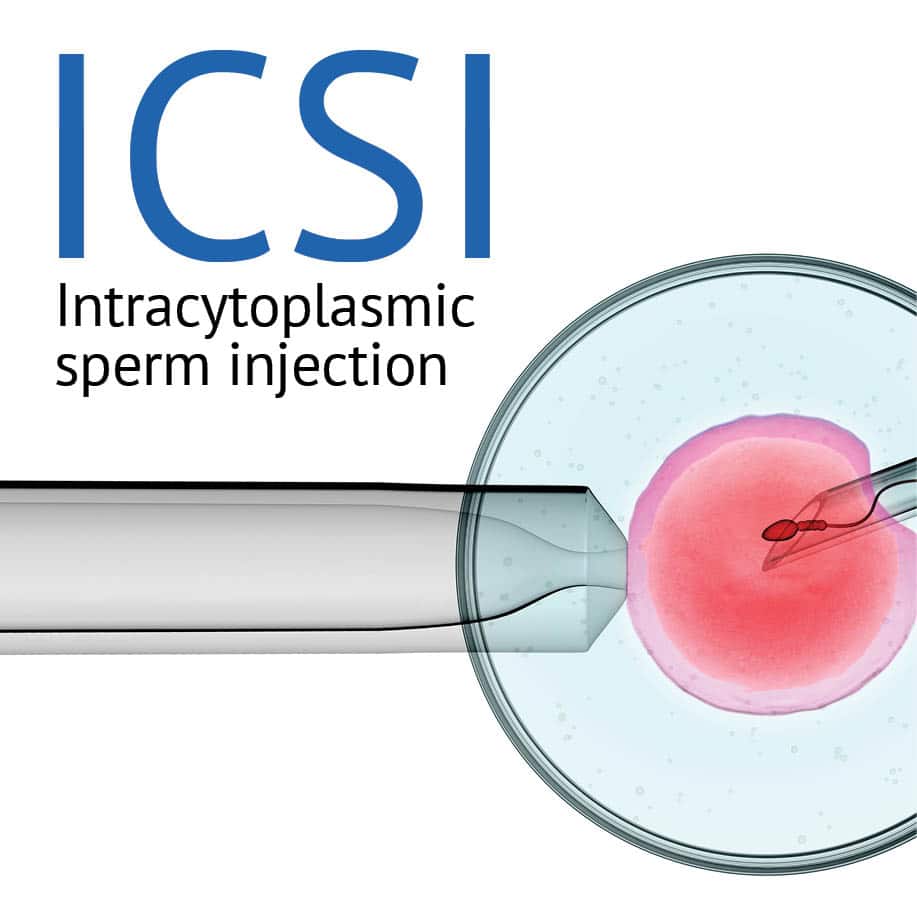
Image of ICSI intracytoplasmic sperm injection
ICSI – A beginners guide
By Dr Peng Ng, a specialist at City Fertility Brisbane Southside Modern medicine is a wonderful thing, whether it is creating lives or saving lives it never ceases to amaze. These medical advances are ever-present in fertility medicine and one of the interesting facts about seeking fertility help in this era is that there are now so many different methods and treatments that can increase your chances of achieving a pregnancy. One of these fertility treatments is Intracytoplasmic Sperm Injection or ICSI as many people call it, and it is a type of IVF that has been helping create babies for the past 30 years. So why is ICSI different to straight IVF and what does it involve? Here is a quick guide to help enlighten you. A specialised form of IVF ICSI is a specialised form of In Vitro Fertilisation (IVF) that is used primarily for the treatment of severe cases of male-factor infertility. It involves the injection of a single sperm directly into a mature egg. In contrast, IVF relies on the egg and the sperm being left in a petri dish to fertilise on their own accord. At City Fertility we use a medium named Sperm Slow™ during sperm selection. This medium contains hyaluronan (HA), which binds sperm that are more likely to have normal DNA, and thus allows selection of these bound sperm for injection. By selecting the sperm that are bound to HA and using them for ICSI, the embryologists are preferentially using the better-quality, more mature sperm. Please note that, while this technique using HA is standard practice, it may not be suitable in every case depending on individual circumstances. About 30 per cent of all infertility is due to a significant male-factor problem. ICSI has revolutionised the treatment of male infertility. Before the first successful ICSI pregnancy in 1992, little could be offered to couples with severe male-factor infertility, aside from using donor sperm. Who is ICSI recommended for? ICSI is recommended for couples who have had poor or no fertilisation during standard IVF. In addition, it is recommended for men who have any of the following known concerns: poor sperm morphology (abnormally shaped sperm); Poor sperm motility (slow-moving); a low sperm count; An obstruction such as a vasectomy, which prevents sperm release; anti-sperm antibodies (which are produced by the man’s body and may inhibit sperm function); a vasectomy reversal that was unsuccessful or resulted in a low sperm count or poor-quality sperm. What are the steps? Step 1: The female ovaries are stimulated with medication to help promote the growth of follicles containing eggs. Step 2: The mature eggs are retrieved from the female partner during a standard IVF cycle. Step 3: The male partner’s sperm is selected – a semen sample is prepared in the laboratory to isolate as many healthy, moving sperm as possible. Step 4: After the eggs have rested for two to three hours, following their removal from the female, the tight outer coating (cumulus) is gently removed from each egg so the maturity of the eggs can be clearly observed. The genetically mature eggs are selected. Step 5: The embryologist then injects a single sperm as previously selected into the mature egg. Step 6: The injected eggs (in dishes) are placed in the incubator overnight and checked for fertilisation 16-18 hours later. Step 7: Those that have fertilised are then left in the incubator to continue to grow for 2-5 days. Step 8: An embryo is then chosen for transfer. It is loaded into a transfer catheter and placed into the uterus. Generally, only one embryo is transferred and in exceptional cases two. Step 9: Any remaining good quality embryos can be vitrified (frozen) and stored for subsequent cycles if the first cycle is not successful. Step 10: A pregnancy test is then carried out approximately 14 days after the embryo transfer.   Make your appointmentRequest an appointment with one of our specialists.
Fertility Options for Single Women
By Dr Peng Ng, specialist at City Fertility Centre Brisbane Southside. Making decisions about your fertility can be a daunting prospect if you are single, but the good news is there are assisted reproductive methods available that may help you when considering your options of motherhood either now or in the future. Single women who are keen to become a mum need to decide on whether they would like to parent a child alone or perhaps wait to see if the right partner comes along. Unfortunately, age can be one of the driving factors that can impact on this important decision because female fertility declines over time. Once a woman reaches the age of 35, fertility begins to reduce. By age 40, it is estimated that a female’s conception rate is in the range of 8-10 per cent a month and at age 43, the pregnancy rate is thought to be 1-3 per cent a month. So, if you are a single woman and want to become a parent, the options at some point include: Donor Insemination This involves artificial insemination – a fertility procedure in which treated sperm is inserted into a woman’s uterus directly at the fertile time to provide a chance of conception. This method for single women usually involves the use of frozen sperm from a donor.   In Vitro Fertilisation In Vitro Fertilisation (IVF) literally means “fertilisation in glass”. For single women it involves the fertilisation of the egg by a donor sperm in an incubator outside the body, followed by transfer of the embryo back into the uterus. For this to take place the woman has to undergo a full IVF cycle, including an egg-retrieval process. Any spare eggs can be frozen or fertilised with donor sperm and frozen as embryos.   Intracytoplasmic Sperm Injection Intracytoplasmic Sperm Injection (ICSI) is a specialised form of IVF and involves the injection of a single sperm directly into a mature egg. This method would only be used with single women if the donor’s sperm quality is poor or previous IVF cycles showed a poor fertilisation rate.   Egg Freezing For a range of reasons, egg freezing can potentially be helpful for single women, including those who may wish to try to have children at a later date, those with a genetic disorder that could limit their fertility, and cancer patients who may need to undergo chemotherapy. The process of freezing female eggs has advanced rapidly over the past 10 years and research studies are reporting equally successful fertilisation and embryo development rates for frozen eggs as compared with fresh ones. However, it is essential that egg freezing happens only after appropriate counselling. While there are many egg-freezing success stories, there is no guarantee that a particular woman will have a baby down the track, frozen eggs or not. However, the younger the woman is when she freezes her eggs, the better quality they will be and hence the greater chance of a successful pregnancy at a later date. For women who do become single parents, recent research is encouraging and has reported that single mothers who use donor insemination are parenting their children equally to partnered women. There are no significant differences in the parent’s wellbeing or children’s development*. Whatever your decision, we recommend consulting a qualified fertility counsellor to help you through the process. *Quality of parenting, mother and child wellbeing and ‘daddy talk’ in single-parent families formed through the use of donor insemination http://www.fertstert.org/article/S0015-0282(15)00626-3/fulltext   Image courtesy of Shutterstock.com
1
2
3
4
5

Appointment Details

Please enter your personal details, and your partner’s details if applicable.

icon

Dr Peng Ng

Loading clinics...

You have selected :

Your Details

Please enter your personal details, and your partner’s details if applicable.

You have selected :

Fertility History

Please provide your and/or your partner's fertility history information to help us better support you.

You may select multiple options.

You have selected :

Please accept our practice policies

The clinic would like you to be aware of the following policies.

Appointment Confirmed

Confirmation of your booking has been sent to your email: user_email@email.com

If you don’t receive an email, please check your Junk/Spam. If you still can’t find the email, please call 1300 354 354 to check your booking.

You have selected :