
What is IUI?
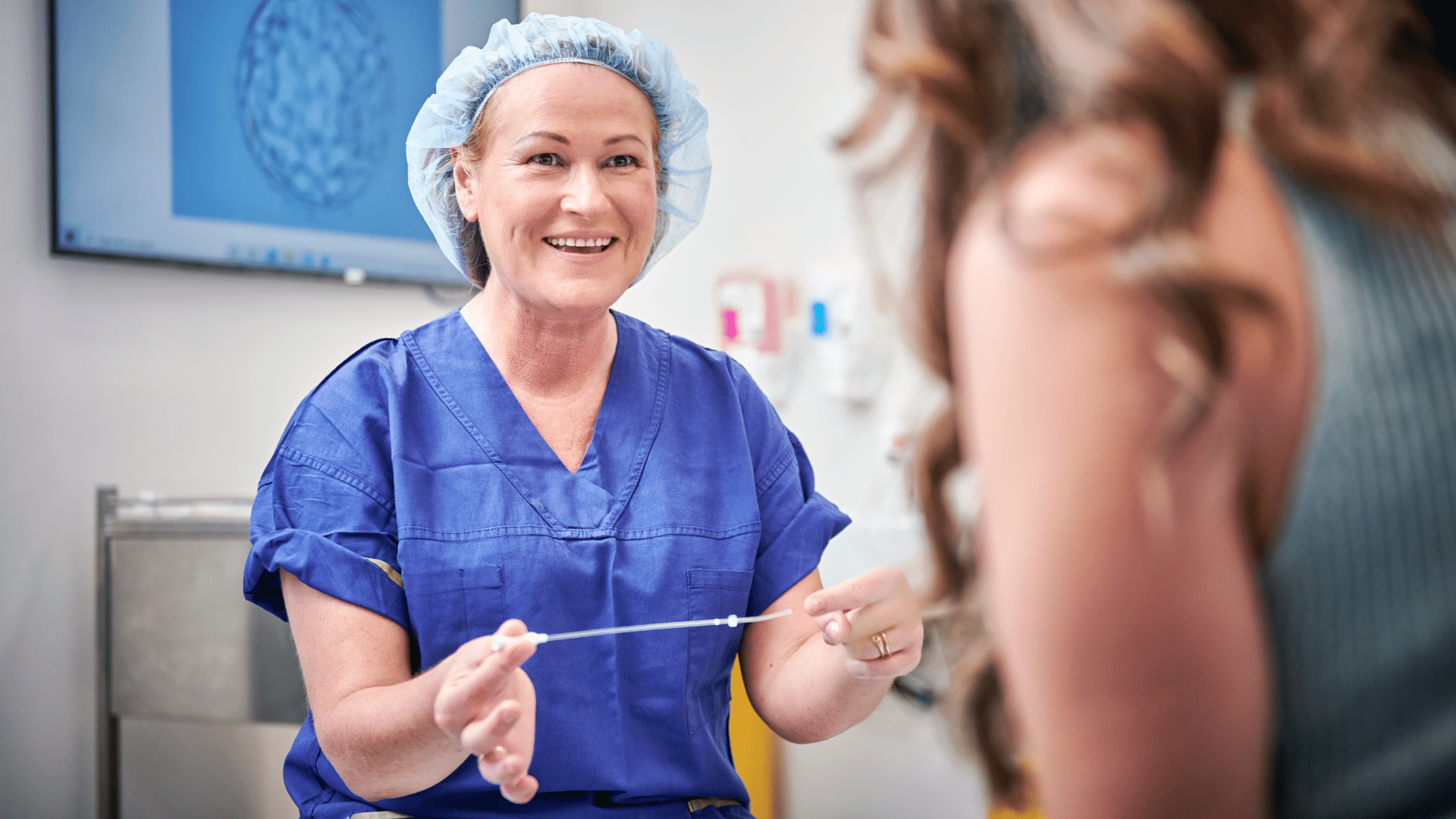
Artificial insemination, also known as Intrauterine Insemination (IUI), is a fertility procedure in which washed and concentrated sperm is directly inserted into a woman’s uterus around the time of ovulation to improve the chances of conceiving.
Your fertility specialist may recommend IUI as a less invasive and more affordable introduction to fertility treatment or when donor sperm is required. IUI treatment is not suitable for everyone and depends on many factors. It may be recommended for couples experiencing any of the following:
- Unexplained infertility.
- Single women and same-sex couples
- Mild endometriosis.
- Ovulatory disorders that are responsive to fertility medication.
- Problems with intercourse, but potentially normal sperm production.
- Male partner is absent for long periods – sperm may be frozen.
- Hostile cervical mucus.
Artificial Insemination or IUI treatment is not recommended for:
- Women over 38 years of age.
- Women with tubal blockage or severe tubal damage.
- Women with severe endometriosis.
- Cases where the male partner has a markedly abnormal semen assessment.
Artificial insemination with donor sperm
Donor sperm can also used for artificial insemination, which can also be known as donor insemination (DI) cycles. This is suitable for single women, same-sex couples or in cases where a male partner is azoospermic (no sperm produced).
- Is a carrier of a hereditary disease.
- Has HIV
- Is unable to produce sperm.
Read our fact sheet about donor insemination to learn more about this treatment option.
Request an appointment with one of our specialists.Book an Initial Consultation
What is the IUI process?
The IUI procedure involves the use of fresh or frozen sperm from a partner or donor. The artificial insemination process includes the following steps:
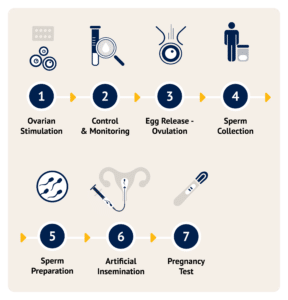
Ovarian stimulation involves taking oral medication or follicle-stimulating hormone (FSH) injections at the start of your period to stimulate the ovaries and encourage the growth of multiple follicles containing eggs.
Your fertility specialist will closely monitor your response during ovarian stimulation with ultrasounds and/or blood tests. This is important as ovulation induction medication is powerful and may need to be adjusted to control the number of follicles thus reducing the risk of a multiple pregnancy.
When the follicle(s) reach a certain size a Human Chorionic Gonadotrophin (hCG) injection (often referred to as a ‘the trigger injection’) is administered in preparation for intercourse or intra-uterine insemination (IUI).
IUI treatment can use fresh sperm or frozen sperm from a partner or a sperm donor. No matter what sperm is being used, a washed concentrated sample of motile sperm will be used for insemination.
The sperm sample is prepared in a way that concentrates the motile sperm in a small volume. By removing the seminal plasma, debris and sub-optimal sperm, the final preparation allows for the best quality sperm to be used for the IUI.
The final stage of IUI treatment is the insertion of the prepared sperm directly into the woman’s uterus. Your fertility specialist will use a speculum and a disposable catheter to bypass the cervix. Insemination is a simple procedure and just takes a few minutes – many women describe it as being like a Pap smear.
The benefits of the insemination process are:
- Ovulation is monitored so the sperm is placed in the uterus at the optimal time
- The sperm is concentrated so the quality and motility of the sample are improved
- More sperm enter the uterus due to bypassing the cervical mucous
The final stage of IUI is called the luteal phase and it’s the two weeks between insemination and the pregnancy test. Many people find this to be the most difficult time to endure. Whilst it’s an exciting and optimistic time, it can often be emotionally charged with expectation and anxiety. You will be encouraged to eat well, stay hydrated and keep busy while you wait for your pregnancy blood test.
IUI treatment options
There are three IUI treatment options:
- Natural cycle insemination: This option does not involve any medication and follows the woman’s natural menstrual cycle.
- Clomiphene citrate ovulation induction: This option involves the use of medication to stimulate the ovaries and cause or regulate
- FSH ovulation induction: This option involves the use of hormone injections to stimulate the ovaries and cause or regulate ovulation.
The best pregnancy results are achieved using the CC or FSH treatment options. IUI treatment is not suitable for everyone. This treatment depends on various factors and your fertility specialist will determine if this is a suitable treatment for you.
How long does it take to determine IUI’s success?
Your pregnancy test is performed two weeks after the insemination. The time between the insemination and your pregnancy test is often emotionally charged with expectation and anxiety. We understand that this can be a difficult time and encourage you to contact your fertility clinic for support.
If your IUI treatment is unsuccessful
If your artificial insemination or IUI procedure is unsuccessful, we encourage you to have a follow-up appointment with your fertility specialist. At this appointment, plans for further treatment can be made and any questions answered.
In vitro fertilisation (IVF) has a much higher pregnancy success rate than IUI with an average pregnancy rate of approximately 42.5%*. It is generally recommended that you move to IVF if IUI has been unsuccessful after two. Your fertility specialist will discuss treatment with you at follow-up consultations.
Request an appointment with one of our specialists.Make your appointment